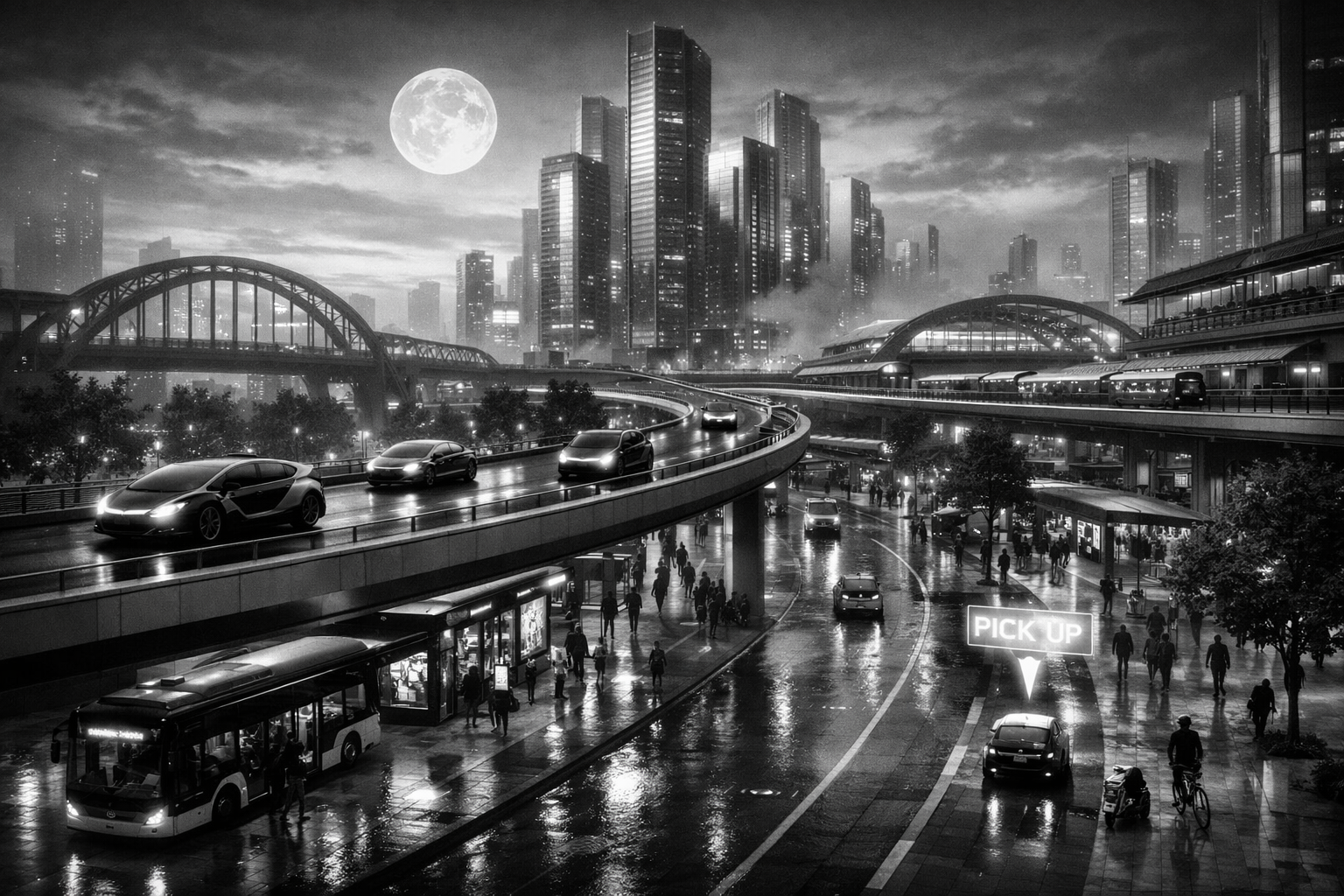
A quiet threat to public transport is not the robotaxi. It is the empty seat.
If autonomous taxis become cheap enough, the biggest change to public transport will not be a dramatic collapse of buses and trains. It will be a slow leak of riders who used to fill the "easy" trips: the short hop to the station, the off peak errand, the late night ride home. Public transit systems are built on shared demand. When that demand fragments into millions of private, on demand decisions, the after effect shows up in budgets, service frequency, and who gets left waiting.
Driverless ride hailing is no longer a science project. Waymo has operated a paid service for years in parts of the United States, and Chinese operators such as Baidu's Apollo Go have expanded robotaxi services across multiple cities. These fleets are still small compared with the scale of urban travel, but they are large enough to reveal the pattern: autonomous taxis compete hardest where public transport is most vulnerable, and complement it where public transport is strongest.
What autonomous taxis really are, and why that matters for transit
Most autonomous taxi services today operate at Level 4 automation, meaning they can drive without a human in defined areas and conditions. That detail is not technical trivia. It shapes where they can run, when they can run, and which trips they can steal or support.
A geo fenced robotaxi zone tends to start where mapping is easiest, roads are well marked, and demand is predictable. That often means downtown corridors, airport routes, and affluent neighborhoods with good infrastructure. Public transport agencies, meanwhile, are expected to serve everywhere, including low density suburbs and lower income areas where service is expensive to provide. The mismatch creates a risk: robotaxis can skim the profitable trips while transit keeps the costly obligations.
The first after effect: ridership shifts that look small until they compound
Public transport is sensitive to marginal riders. A bus route does not need to lose half its passengers to become politically and financially unstable. It often only needs to lose enough riders that frequency drops. Once frequency drops, waiting becomes the dominant cost of the trip, and more people leave. This is the transit version of a bank run, except it happens over months.
Autonomous taxis are well positioned to pull riders from three categories. The first is the short trip that competes with walking, cycling, or a feeder bus. The second is the irregular trip where schedules feel like friction. The third is the late night or low demand period where transit agencies already struggle to justify frequency.
Early evidence from autonomous ride hailing trials has repeatedly suggested that a meaningful share of robotaxi trips would otherwise have been taken by bus, bike, or on foot when pricing is competitive. Even when the numbers vary by city, the direction is consistent. Door to door convenience is a powerful substitute for a fixed route, especially for discretionary travel.
There is a second, less discussed shift: trip generation. When a ride becomes easier, people take more of them. That can be good for mobility and economic activity, but it can also increase vehicle miles traveled. If those extra miles happen on streets where buses already crawl, the indirect effect is slower buses and less reliable service, even if ridership stays steady.
The second after effect: a new pricing war that transit cannot easily win
Transit fares are political. They are also blunt instruments. A city can discount a monthly pass, offer free transfers, or cap fares, but it cannot easily change the price minute by minute to match demand. Ride hailing can, and autonomous fleets will push that advantage further.
The economic promise of autonomous taxis is simple: remove the driver cost and the per mile price can fall, especially at high utilization. In practice, the savings arrive only when fleets are used heavily and downtime is minimized. Sensors, maintenance, remote assistance, insurance, and charging infrastructure are not cheap. But even before robotaxis become universally inexpensive, operators can use targeted discounts to win specific trips that matter to transit, such as the first mile to a rail station or the ride home after an event.
This is where the after effect becomes structural. Transit agencies rely on cross subsidy. Busy routes help fund coverage routes. Peak commuters help fund midday service. If autonomous taxis selectively undercut the trips that generate the most fare revenue, agencies may face a choice between raising fares, reducing service, or increasing public subsidy. None of those options is painless.
The third after effect: public transport becomes more like a backbone, less like a complete system
In the most plausible medium term scenario, autonomous taxis do not replace metros or high frequency bus corridors. They reshape the edges. Think of transit as a spine and robotaxis as the connective tissue.
This can be a genuine upgrade if cities design it intentionally. A rail line is extremely efficient when it is fed well. The problem is that many people live just far enough from a station that the walk feels unreasonable, but not far enough to justify a frequent feeder bus. Autonomous taxis can fill that gap, especially if they are pooled or priced to encourage shared rides.
The risk is that the connective tissue becomes a competing skeleton. If robotaxis are allowed to operate as cheap single occupant rides everywhere, they can pull riders away from the very trunk routes that make transit efficient. The difference between complement and cannibal is not the vehicle. It is the policy.
The fourth after effect: street space gets renegotiated, curb by curb
Autonomous taxis change what cities fight about. Parking becomes less central, and curb access becomes more valuable. A driverless fleet can circulate, reposition, or return to a depot. That can reduce the need for prime on street parking in dense areas, freeing space for bus lanes, bike lanes, wider sidewalks, and loading zones.
But it can also create a new kind of congestion. Pickups and drop offs concentrate at the curb, exactly where buses need clear space to stop and merge. If a city does not manage curb space, robotaxis can slow buses simply by occupying the wrong 20 meters of road at the wrong time.
There is a more optimistic possibility. Fleet management software can smooth demand by nudging departure times and routing vehicles away from bottlenecks. If cities require data sharing and integrate it with traffic signal priority for buses, autonomous fleets could indirectly improve bus speeds. That is not automatic. It requires governance and technical coordination that many cities have not yet built.
The fifth after effect: accessibility improves, but equity becomes a policy test
For riders with disabilities, autonomous taxis could be transformative. Paratransit is often expensive, capacity constrained, and requires advance booking. A well designed autonomous fleet with wheelchair access and reliable pickup times could offer more independence at lower cost per trip, especially if it is integrated with public transport eligibility programs.
Yet equity is where the market logic collides with the public mission. Robotaxi operators will naturally expand where utilization is high and operational complexity is low. That can mean better service in wealthier areas first, while neighborhoods with poorer road conditions, weaker connectivity, or higher perceived risk wait longer. If public agencies treat autonomous taxis as a private luxury add on, the mobility gap can widen.
The equity question is also about payment and access. Public transport works with cash, concessions, and simple rules. App based mobility assumes a smartphone, a bank card, and comfort with digital systems. Cities that want autonomous taxis to support public goals will need requirements around payment options, service coverage, and accessible vehicle ratios, not just safety permits.
What transit agencies can do now, before the shift becomes irreversible
The most effective response is not to fight autonomous taxis as a category. It is to decide which trips should be protected for high capacity transit, which trips should be handed to on demand services, and how to stop the middle ground from collapsing.
One practical move is to treat autonomous taxis as a contracted feeder service rather than a parallel network. Agencies already contract operators for paratransit and demand responsive shuttles. A similar model can work for first and last mile connections to rail and bus rapid transit, with pricing that rewards shared rides and penalizes empty vehicle miles in congested zones.
Another move is to modernize fares around outcomes rather than modes. If a city wants fewer cars downtown, it can cap the combined cost of a robotaxi to a station plus a train ride, making the multimodal trip feel like one product. Mobility as a service has promised this for years, but autonomous taxis raise the stakes because they can make the alternative feel effortless.
Curb management is the unglamorous battleground that will decide whether buses get faster or slower. Dedicated pickup zones, enforced no stopping areas near bus stops, and pricing for curb access during peaks can protect transit reliability. Without that, the bus becomes the victim of everyone else's convenience.
Data is the final lever. Cities that require real time trip metrics, origin destination patterns, and empty miles reporting can plan service changes with evidence rather than guesswork. They can also detect when robotaxis are siphoning riders from a corridor where a bus lane would deliver more public value.
The long game: the future is not bus versus robotaxi, it is coordination versus chaos
Autonomous taxis will make public transport feel different even for people who never use them. Some bus routes will disappear and be replaced by on demand coverage. Some rail stations will become more valuable because the last mile becomes painless. Some streets will reclaim parking and give it to people, or they will surrender it to a constant churn of pickups.
The after effect that matters most is whether cities let autonomous taxis become a private alternative to shared mobility, or whether they fold them into a system where the highest capacity modes get priority and the on demand modes fill the gaps. In that world, the question is not whether a robotaxi can replace a bus, but whether it can make the bus so useful that you stop thinking about owning a car at all.
When the cheapest seat in the city is no longer the one you drive yourself, every transport policy becomes a choice about what kind of freedom you want to scale.